
Editorial Disclosure: This article may contain affiliate links. We may earn a commission if you make a purchase, at no extra cost to you. Additionally, this content was drafted with the assistance of AI technology, but has been rigorously reviewed, fact-checked, and edited by our editorial team to ensure accuracy and quality.
Quick Answer
Choosing between Lemonade and State Farm renters insurance depends on your priorities—AI-driven efficiency or personalized service.
- Coverage Limits: Lemonade offers up to $250,000 for property; State Farm is customizable.
- Monthly Costs: Both start at $5, with variation due to location and claims history.
- Claims Process: Lemonade prioritizes speed with AI, while State Farm focuses on human interaction.
- Customer Satisfaction: State Farm ranks high for service; Lemonade appeals to tech-savvy users.
Introduction
Lemonade vs State Farm renters insurance: it’s a decision many renters face today. The right insurance protects your belongings and gives you peace of mind. But choosing the right provider is no small task. With different coverage options, pricing structures, and customer service approaches, it can feel overwhelming.
In my years evaluating insurtech tools, I’ve seen that the decision often boils down to what you value more—cost, convenience, or personalized support. Lemonade has disrupted the market with an AI-based model, offering quick solutions and low costs. On the other hand, State Farm stands strong with its trusted legacy of reliable service and comprehensive coverage options.
This guide will take you through a detailed analysis of both companies, helping you find the renters insurance that aligns with your lifestyle and needs. Whether you’re a fan of cutting-edge technology or prefer the comforting voice of a local agent, we’ve got insights that make this decision easier.

Table of Contents
Lemonade vs State Farm Renters Insurance Explained
Understanding Lemonade’s Approach
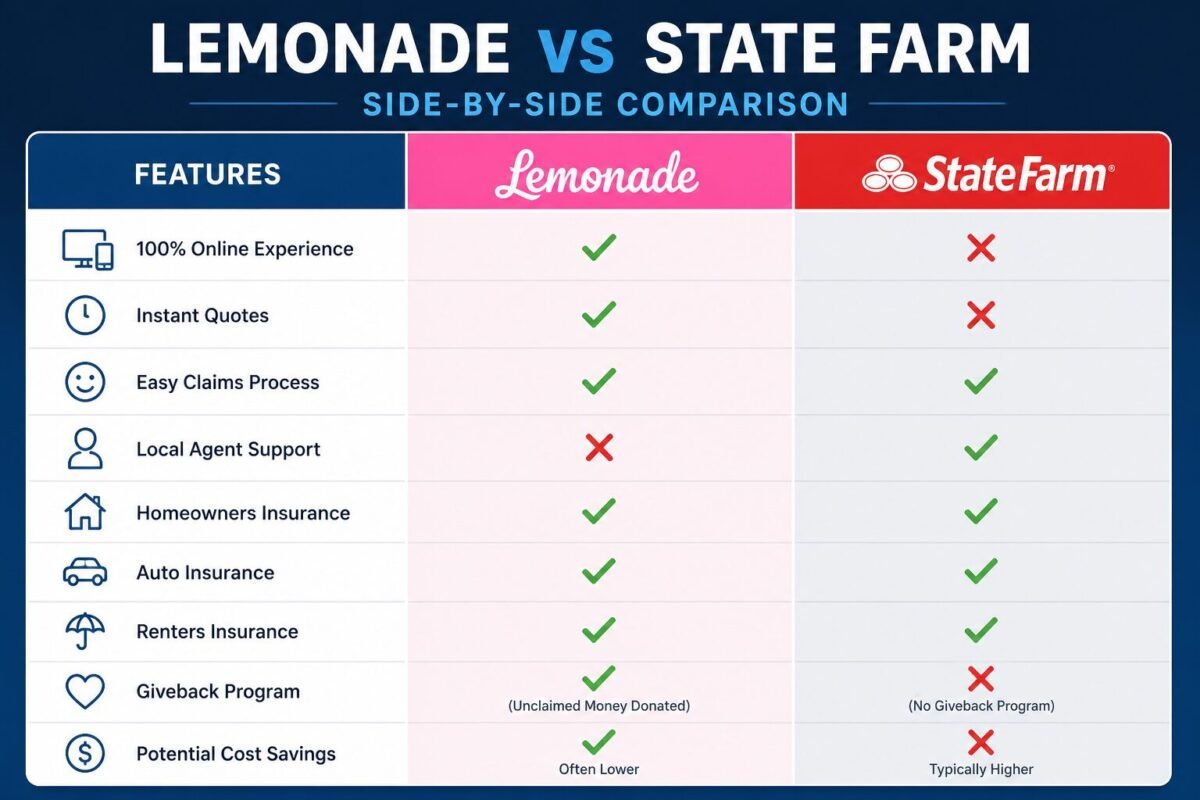
Lemonade has taken the insurance world by storm since 2015 with its AI-driven model. Starting at just $5 a month, they emphasize speed and transparency in their operations. Their app is designed for quick claims processing, often in mere minutes. This efficiency appeals to those who prefer minimal fuss.
Examining State Farm’s Legacy
Since 1922, State Farm has built a robust reputation through personalized service. With a wide network of agents, they offer tailored advice and support, crafting policies that suit your specific needs. Though premiums might be slightly higher, many see it as paying for peace of mind and comprehensive protection.
Feature Comparison Breakdown
| Feature | Lemonade | State Farm |
|---|---|---|
| Personal Property | Up to $250,000 | Customizable |
| Liability | Up to $1 million | Up to $1 million |
| Loss of Use | 20% of coverage | Unlimited |
| Claims Process | AI-driven, quick | Agent-assisted, personalized |
Coverage Options and Costs
What Does Each Offer?
Both Lemonade and State Farm provide flexibility in personal property and liability coverage. However, Lemonade generally caps coverage amounts, while State Farm allows more customization. Consider your location and belongings to determine what coverage level works best for you.
The Pricing Puzzle
Each company offers plans starting at $5 per month, but the price might vary. Lemonade uses AI for risk assessment, potentially lowering costs. State Farm relies on traditional evaluation methods, factoring location, credit score, and claims history. It’s crucial to compare quotes based on your living situation.
Claims Process: Speed vs. Service
Lemonade’s Swift AI
Lemonade’s claims process is entirely digital. Their AI can often resolve claims in under five minutes. It’s ideal if you prioritize speed and don’t require face-to-face interaction.
State Farm’s Personalized Touch
State Farm prefers a human approach. With a local agent guiding you through the process, the claims take longer but offer personalized support. This can be invaluable in complex situations where expertise is needed.
Customer Experience and Satisfaction
What Customers Say
According to J.D. Power, State Farm consistently receives top marks for customer satisfaction due to their network of local agents. Meanwhile, Lemonade appeals to younger, tech-savvy customers who appreciate the ease and speed of a digital-first approach.
Analyzing Feedback
While both companies have positive feedback, the decision often hinges on individual preferences. If you value personal interaction, State Farm might be the way to go. Lemonade is more suited for those seeking a quick, digital experience.
Pros & Cons: Weighing Your Options
Lemonade Advantages
Lemonade’s benefits include fast claims, low costs, and a seamless app experience. If you’re tech-friendly and appreciate speed, Lemonade fits the bill perfectly.
Lemonade Drawbacks
However, its focus on automation means less personalized service. If you find comfort in human interaction, this might be a downside.
State Farm’s Strengths
State Farm thrives on trust, personalized service, and broad coverage options. For those who prefer tailored advice, the slightly higher cost may be worth it.
State Farm’s Weaknesses
On the downside, premiums can be higher, and the claims process may not be as swift as Lemonade’s, which could be a drawback for those in need of quick solutions.

The Unfiltered Verdict
Many experts argue that while AI-driven models like Lemonade’s are exciting, they don’t replace human expertise. In complex situations, nothing beats an experienced agent’s perspective. A real trap many fall into is assuming all policies are the same, but nuances matter.
FAQ Section
- How do Lemonade and State Farm differ in insurance coverage?
Lemonade offers straightforward, digital-focused plans, while State Farm provides customizable options with agent support. - Who offers better pricing?
Pricing varies; Lemonade is often cheaper due to AI assessments, but State Farm’s pricing reflects a more personalized service. - Which claims process is more efficient?
Lemonade’s AI offers rapid processing, but State Farm’s human touch ensures thorough, personalized help. - How does customer service differ?
Lemonade’s approach is digital with less personal interaction, whereas State Farm provides a local agent-driven experience. - What’s the better choice for tech-savvy users?
Lemonade appeals to those who value digital convenience, while State Farm is preferred by those who prioritize personal interaction.
For more insights, visit The Insurtech Guide for comprehensive reviews and industry trends. It’s a great resource to navigate the insurance world effortlessly.






Leave a Reply