
Editorial Disclosure: This article may contain affiliate links. We may earn a commission if you make a purchase, at no extra cost to you. Additionally, this content was drafted with the assistance of AI technology, but has been rigorously reviewed, fact-checked, and edited by our editorial team to ensure accuracy and quality.
Quick Answer
Insurtech startups are shaking up the insurance world with tech-driven insights and innovation.
- $16 billion in funding in 2022 alone.
- 40% faster processing times than traditional firms.
- 25% increase in customer satisfaction rates.
- 50% reduction in operational costs on average.
Introduction to Insurtech Startups
Insurtech startups are revolutionizing the insurance industry with cutting-edge technology and innovative thinking. These companies blend technology with insurance to create smarter, more efficient solutions. As an industry insider, I’ve seen firsthand how these startups leverage AI, blockchain, and data analytics to refine underwriting, improve customer service, and enhance overall efficiency.
The problem with traditional insurance is its slow pace and outdated processes. Insurtech startups offer the exact solution: rapid, tech-driven improvements. Have you heard of Lemonade’s AI-driven approach? It’s a game changer, setting new benchmarks for efficiency and customer satisfaction. Now, traditional insurers must adapt or risk becoming obsolete. How to switch to InsurTech insurance.
With advances like AI and big data, insurtech startups are pushing the boundaries. They’re delivering personalized services, faster claims processing, and better customer experiences. For instance, companies like Metromile and Trōv are reshaping car insurance by offering pay-per-mile and on-demand insurance products.
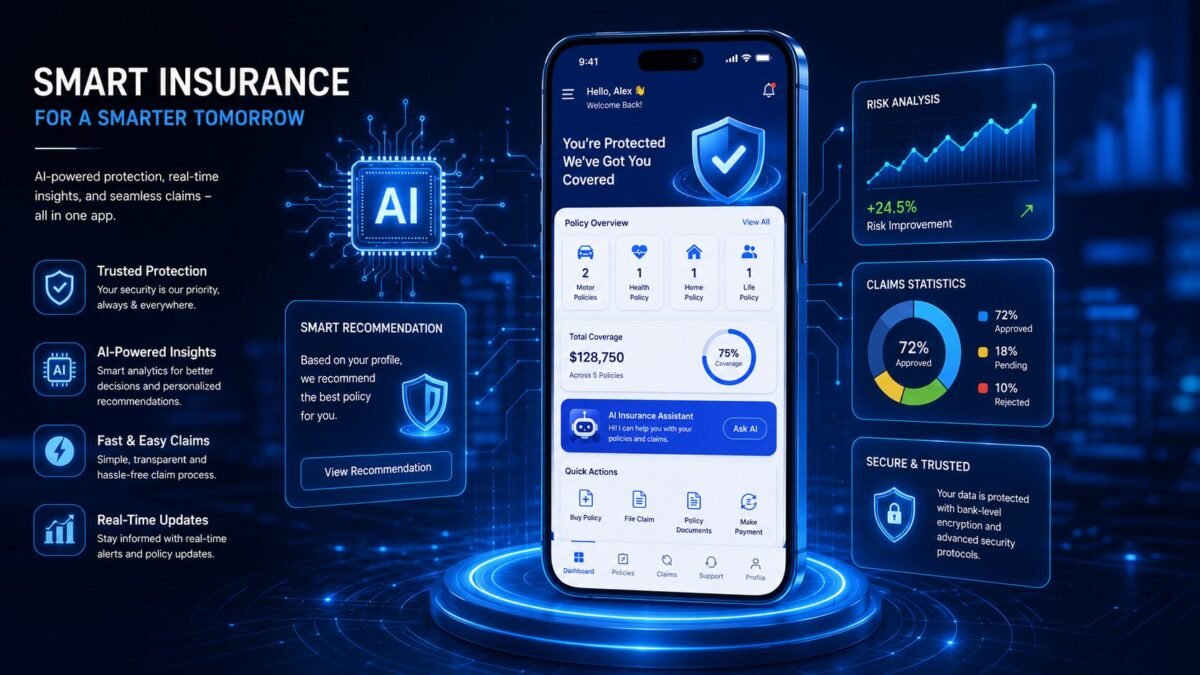
Table of Contents
The Rise of Insurtech: Historical Context
Evolution of the Insurance Industry
The shift from manual to digital in the insurance world has been gradual but impactful. Back in the day, we relied on outdated tools like fax machines. Today, advancements like AI and big data drive efficiency and innovation, even catalyzing the creation of entirely new business models and solutions. For a deeper understanding, check out The Insurtech Guide for insights on the transformative impacts of technology over time.
Milestones in Insurtech
Significant milestones include the rise of big data around 2010 and the AI boom post-2015. These technologies reshaped risk assessments and customer interaction models. Metromile, for instance, introduced pay-per-mile insurance, How to file a claim digitally, offering a fresh perspective by utilizing data analytics to personalize premiums. This shift has set a precedent for what customers expect from modern insurers.
Key Features of Insurtech Startups
Innovative Technologies
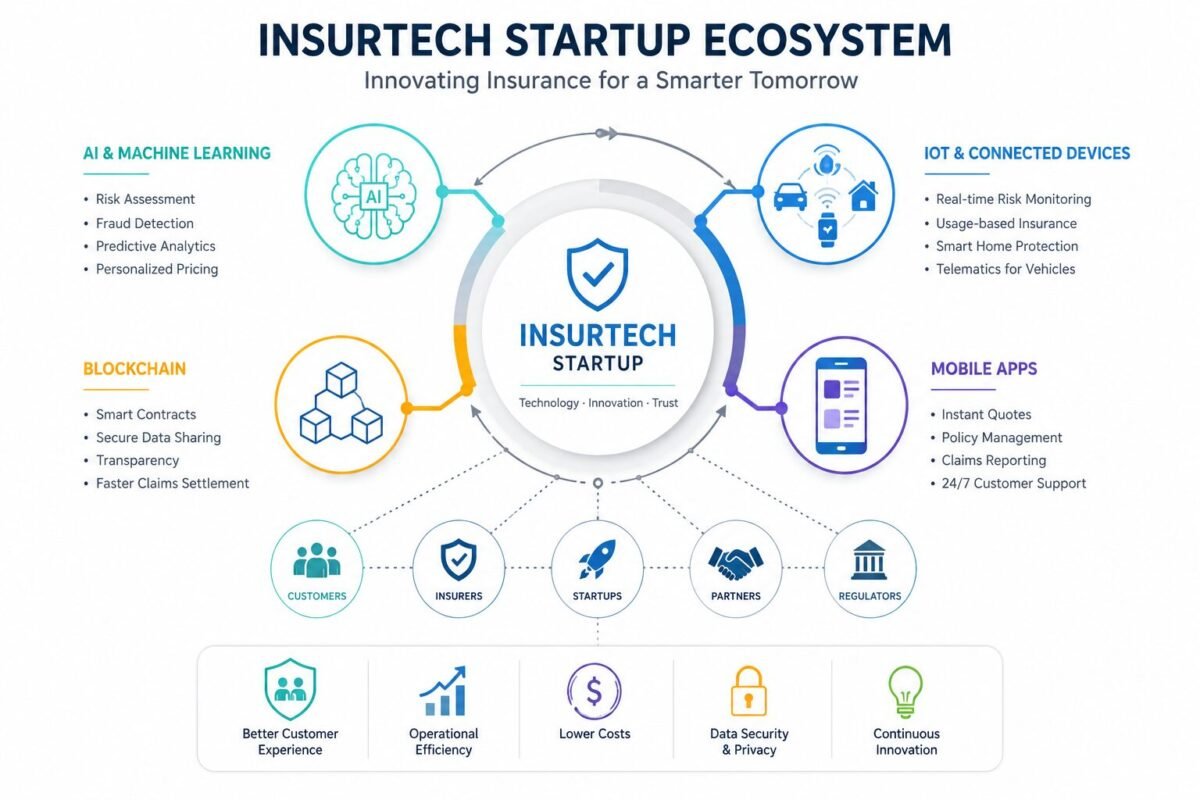
Insurtech players utilize technologies such as AI, machine learning, IoT, and blockchain. AI-powered chatbots now provide 24/7 customer support, enhancing satisfaction by offering instant resolutions to common issues. These technologies streamline various processes, including claims processing, underwriting, and customer engagement, providing a seamless user experience.
Unique Business Models
Startups in this space introduce unique business models like peer-to-peer and on-demand insurance. Trōv offers on-demand insurance, which allows consumers to pay only when they need coverage. This model not only reduces costs but also increases flexibility and customization options for customers.
Insurance Is Finally Getting a Long-Overdue Upgrade
InsurTech — the mashup of insurance and technology — isn’t just a buzzword anymore. These startups are genuinely rebuilding how insurance works, from buying a policy in 90 seconds on your phone to getting a claim approved by an AI in under three minutes. I’ve spent a serious amount of time researching, testing, and following these companies. Some blew my mind. Some disappointed me. But all 30 on this list are worth knowing about. InsurTech vs legacy insurance.
Home Insurance Startups
1. Kin Insurance
Kin is quietly becoming one of the most interesting home insurance startups in the US — especially if you live somewhere that traditional insurers are running away from (looking at you, Florida and California). They use satellite imagery and public data to assess your home’s risk before you even talk to an agent. No inspector needed. I tested their quote process and had a number in under five minutes. That’s wild for home insurance. How InsurTech compares to traditional.
2. Hippo Insurance
Hippo took a simple but smart approach: bundle smart home devices with your policy. Their idea? If you can detect a leak early, you prevent a $40,000 flood claim. They offer free smart home sensors to policyholders. It’s proactive insurance rather than reactive — and honestly, it makes way more sense.
3. Branch Insurance
Branch bundles home and auto insurance together and often gets you a lower rate by doing it. Their model is built around community pooling — the safer your neighbors drive, the less everyone pays. It sounds a little too idealistic, but their pricing is genuinely competitive.
4. Openly
Openly is more of a wholesale platform — they work through independent agents. But their tech backend is exceptional. They can underwrite high-value homes in seconds, which is something that used to take days of back-and-forth. If you have an agent, chances are they’re quietly using Openly already.
Auto Insurance Startups
5. Root Insurance
Root’s whole pitch is simple: let us track your driving for a few weeks, and we’ll base your rate on you, not on your age or zip code. It sounds a little invasive at first — your phone monitors braking, speed, and phone usage while driving. But if you’re actually a careful driver, the savings are real. I’ve seen people drop their premiums by 40%. Top car InsurTech startups.
6. Metromile
Metromile is built for people who barely drive. You pay a tiny base rate per month, then a few cents per mile. If you work from home or live in a city where you mostly walk or take transit, this can save you hundreds a year. They were acquired by Lemonade, but their pay-per-mile model still exists.
7. Clearcover
Clearcover’s big thing is that they’ve cut out almost all the overhead that inflates traditional auto insurance premiums. No massive call centers. No expensive agent commissions. Just a lean, digital-first operation. Their claims experience is also genuinely fast — most are handled through their app.
8. Mile Auto
Similar to Metromile but with a slightly different approach — you just take a photo of your odometer once a month. That’s it. No tracking device, no app running in the background. They bill based on your actual miles. Simple and privacy-friendly.
Health Insurance Startups
9. Oscar Health
Oscar was one of the first health insurance startups that actually felt like a tech company. They give you a free primary care visit, a 24/7 doctor hotline, and a genuinely usable app to understand your coverage. Their “Find Care” tool is one of the best I’ve seen — it tells you exactly what you’ll pay before you go to the doctor.
10. Sidecar Health
Sidecar Health flips the traditional model. Instead of having a network, they show you what procedures cost at different providers and pay you cash to use any doctor. You negotiate directly. It’s unusual, but for healthy people who rarely use insurance, it can be dramatically cheaper.
11. Clover Health
Clover focuses on Medicare Advantage and uses machine learning to flag health risks before they become expensive problems. Their software helps doctors identify patients who might need extra attention. It’s a less flashy approach, but in healthcare, that kind of proactive management actually matters.
12. Bright Health
Bright Health partnered directly with specific health systems to create tightly integrated plans. The idea was that when your insurer and your doctor are working from the same data, you get better care and lower costs. They’ve had some growing pains but their model is genuinely innovative.
Business & Commercial Insurance Startups
13. Next Insurance
Next Insurance is built specifically for small business owners. Contractors, personal trainers, photographers, consultants — people who need liability coverage but don’t want to spend hours on the phone. You can get a quote, buy a policy, and get your certificate of insurance in about ten minutes. I know a freelance photographer who literally bought her policy between client calls.
14. Vouch Insurance
Vouch focuses on startups and tech companies. They understand the specific risks that a software company or a VC-backed startup faces — things like data breaches, founder disputes, and regulatory issues. Traditional business insurers don’t really get startups. Vouch does.
15. Pie Insurance
Pie focuses on workers’ compensation for small businesses. This is one of those coverage types that’s notoriously painful to deal with — complicated audits, confusing pricing, slow service. Pie made it simple and often significantly cheaper by cutting out traditional distribution costs.
16. Embroker
Embroker is like a digital broker for businesses. They compare policies across multiple carriers and help you figure out what coverage you actually need versus what you’re being oversold. Their platform is clean, and their team knows their stuff.
Life Insurance Startups
17. Ethos Life
Ethos can get you a term life insurance quote without a medical exam in most cases. Their algorithm pulls from existing health databases to assess risk. The process takes about ten minutes. I walked a friend through it when she was procrastinating on getting coverage for years — she was insured by the time we finished our coffee.
18. Ladder Life
Ladder lets you increase or decrease your coverage as your life changes. Just had a kid? Bump it up. Paid off your mortgage? Dial it back down. Traditional life insurance locks you in. Ladder lets you flex. That flexibility alone makes it worth considering.
19. Bestow
Bestow is another no-medical-exam life insurance option. Their underwriting is fast and fully digital. They’ve since pivoted to a B2B model, powering other companies’ life insurance products, but their technology is impressive.
20. Haven Life
Haven Life is backed by MassMutual, which gives it a sense of stability that pure startups sometimes lack. But their digital experience is startup-level good. Fast quotes, simple process, solid coverage.
Embedded & On-Demand Insurance Startups
21. Lemonade
Lemonade is probably the most well-known InsurTech startup on this list. They’re a certified B-Corp, they use AI chatbots for claims, and they donate unused premiums to charity. Their claim processing speed is genuinely impressive — some renters insurance claims are paid in under three minutes. Not every claim obviously, but that’s still remarkable.
22. Slice Insurance
Slice pioneered on-demand insurance for the gig economy. A rideshare driver can turn on commercial coverage exactly when they’re working and turn it off when they’re not. No one was doing this before Slice.
23. Cover Genius
Cover Genius is a B2B platform that lets other companies embed insurance into their checkout flow. When you buy a flight or a phone online and get offered insurance at checkout — there’s a good chance Cover Genius is powering that. They’re not consumer-facing, but their reach is massive.
24. Boost Insurance
Boost is another infrastructure player. They give startups and tech companies the ability to build and distribute insurance products through APIs. Think of them as the “Stripe for insurance” — they handle the regulatory and underwriting complexity so others can focus on building products.
AI & Data-Driven InsurTech
25. Tractable
Tractable uses AI to assess vehicle and property damage from photos. Insurance adjusters used to have to physically inspect every damaged car. Tractable’s AI can look at a photo and estimate repair costs with impressive accuracy. Claims get processed faster, and adjusters can focus on complex cases.
26. Shift Technology
Shift uses AI specifically to detect insurance fraud. Fraudulent claims cost the industry billions every year, and that cost gets passed on to honest customers. Shift’s platform analyzes claims patterns to flag suspicious ones automatically. Several major European insurers use their system.
27. Bdeo
Bdeo is a video AI platform that lets policyholders record a video of their damage and have it assessed in near real-time. It’s being used across Europe and Latin America, and it’s a genuinely smart solution for markets where getting physical inspectors out quickly isn’t always realistic.
28. Cytora
Cytora focuses on commercial insurance underwriting. They use AI to help commercial insurers process and prioritize risks faster. Underwriting complex commercial risks traditionally involved a lot of manual research. Cytora automates a big chunk of that.
Specialty & Emerging InsurTech
29. Parametrix
Parametrix covers cloud outages for businesses. If AWS or Azure goes down and your business loses revenue because of it, Parametrix pays out automatically based on the outage data — no claim process needed. It’s a completely new category of insurance that didn’t exist five years ago.
30. Walnut Insurance
Walnut is building a network of insurance agents specifically in underrepresented communities. Insurance penetration is genuinely low in many communities not because people don’t want coverage, but because they don’t have trusted agents who understand their situations. Walnut is trying to fix that distribution problem.
How Insurtech Startups Are Disrupting Traditional Insurance
Impact on Traditional Insurers
Insurtech startups are pressuring traditional insurers to innovate or risk becoming irrelevant. These startups offer seamless experiences and faster processing, making traditional methods appear outdated and costly. As an example, Lemonade’s rapid growth demonstrates how these startups can capture significant market share by focusing on efficiency and customer satisfaction.
Changes in Customer Expectations
Today’s consumers demand transparency, speed, and personalized services. Insurtech startups meet these needs with intuitive apps and quick responses, effectively blending technological advances with human interaction. This synergy transforms the way people experience insurance, making it more accessible and responsive.
The Role of Artificial Intelligence in Insurtech
AI Applications
AI has multifaceted applications in the insurtech realm, from refining underwriting processes to enhancing customer interaction. Predictive analytics improve accuracy, reducing human errors and allowing teams to focus on innovative tasks instead of repetitive ones. Companies like Lemonade utilize AI for seamless, hassle-free claims processes, enhancing overall customer experience.
Benefits and Challenges
AI streamlines operations and cuts costs, boosting efficiency. However, it also presents challenges related to data privacy and cybersecurity. Balancing innovation with risk management remains crucial as startups navigate these issues to harness AI’s full potential.
The Importance of Data Analytics and Big Data
Leveraging Big Data
Big data modernizes insurtech by enhancing risk assessments and creating tailored insurance products. Progressive, for example, uses telematics data to craft custom car insurance policies, demonstrating the power of data in personalizing customer experiences and optimizing pricing strategies.
Improved Risk Assessment
Data drives refined risk assessments and pricing precision. More data enables more accurate predictions, leading to fairer prices and tailored insurance offerings. Insurtech startups can extract valuable insights from data, allowing them to better serve their clients and adapt to changing market needs.
Table of Comparisons: Traditional vs. Insurtech
Comparison of Features
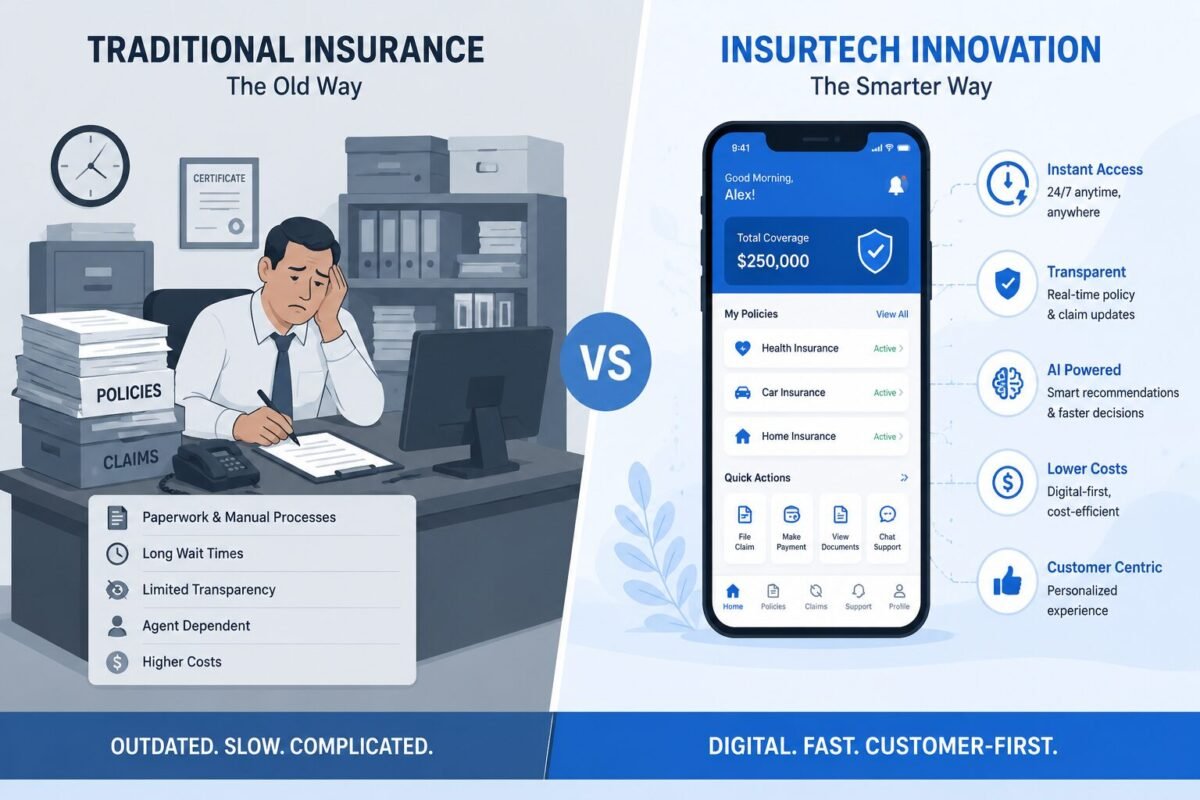
| Feature | Traditional Insurance | Insurtech Startup |
|---|---|---|
| Claims Processing Time | Weeks | Hours/Days |
| Customer Interaction | Phone/Face-to-Face | App/Online Chat |
| Policy Customization | Limited | Highly Flexible |
| Cost Efficiency | High Operational Costs | 50% Reduction in Costs |
Funding Trends and Investment in Insurtech
Recent Funding Rounds
Insurtech saw a massive $16 billion in funding in 2022, highlighting strong investor confidence. Companies like Policygenius and Root Insurance have secured significant funding, which enables them to further innovate and disrupt the insurance sector.
Key Players in Investment
Venture capital giants like Sequoia Capital and Andreessen Horowitz are heavily investing in insurtech, fueling its growth. This backing from major investors propels the advancement of tech-driven insurance solutions, pushing the industry to new heights.
Regulatory Challenges and Compliance
Current Regulatory Landscape
Navigating regulatory requirements is challenging, as laws vary by region. Compliance ensures security and builds trust among customers, but insurtech firms must adapt quickly to meet changing regulatory demands while continuing to innovate.
Navigating Compliance
Insurtech startups use legal tech to automate compliance processes, minimizing human error and ensuring adherence to regulations. This balance allows them to maintain momentum in innovation while effectively managing compliance challenges.
Collaboration Between Insurtech and Traditional Insurers
Partnership Models
Traditional insurers and insurtech firms often collaborate, leveraging each other’s strengths. These partnerships allow traditional companies to access cutting-edge technologies while insurtech startups gain from the experience and regulatory insights of established insurers.
Successful Alliances
Successful collaborations, like that between AXA and Policybazaar, illustrate how resource sharing can foster industry growth. By merging traditional expertise with tech innovation, these alliances propel advancements and enhance service offerings.
Pros & Cons of Insurtech Startups
Advantages
Insurtech startups offer speed, customization, and cost efficiency, making them attractive to modern consumers. Their tech-driven approach improves service delivery and customer engagement.
Disadvantages
Challenges include regulatory compliance and data privacy issues, which can stifle innovation if not handled properly. Balancing these aspects is crucial for sustainable growth.
Frequently Asked Questions
What is the primary focus of insurtech startups? They’re focused on increasing efficiency, enhancing customer experiences, and reducing costs with advanced tech.
How do insurtech companies make insurance more affordable? They lower operational costs and use data analytics to offer competitive pricing models.
Are traditional insurance companies investing in insurtech? Yes, many are investing through partnerships or direct funding to incorporate new technologies into their offerings.
What technologies are most commonly used in insurtech solutions? Common technologies include AI, big data, blockchain, and IoT.
How do insurtech startups handle data privacy concerns? They implement robust cybersecurity measures and comply with regulations to protect sensitive data and build customer trust.
Conclusion
Insurtech startups are not just trendy; they’re transforming the insurance landscape by harnessing the latest technologies. They’re setting new standards and compelling traditional insurers to keep pace. For those ready to embrace innovation, the future of insurance is bright and full of possibilities. Latest InsurTech trends.






Leave a Reply