
Hey everyone! I’m Adnan from The Insurtech Guide. The world of freelancing is built on flexibility. We use on-demand insurance to get covered for specific, short-term projects, which is a fantastic and affordable way to protect our business. But what happens when something actually goes wrong on one of those projects?
A while ago, file on-demand insurance claim during a one-week consulting gig, a client alleged that my work caused them a financial loss. It was a stressful situation, and it was the first time I had to rely on my short-term liability policy. I realized that the process to file an on-demand insurance claim is a bit different from a traditional, year-long policy.
It was a learning experience, and I want to share that knowledge with you. In this guide, I’ll walk you through the exact steps to navigate the claims process with an on-demand insurer, ensuring you’re prepared for the unexpected.

Table of Contents
The First 24 Hours: Your Immediate Steps
The moment an incident occurs or a client makes a liability allegation, the clock starts ticking. What you do in the first 24 hours is critical.
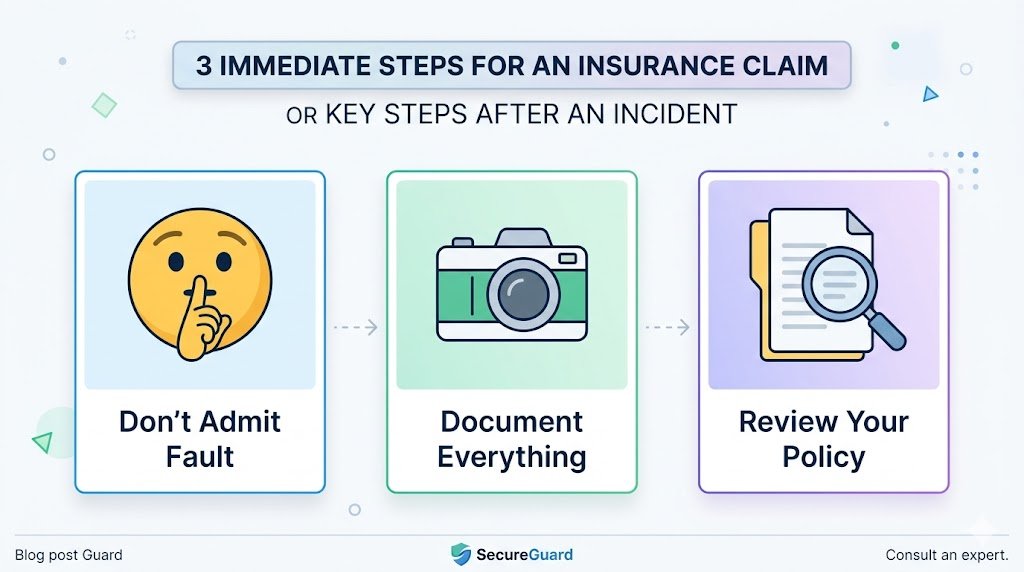
1. Don’t Admit Fault: This is the golden rule. Even if you think you made a mistake, do not admit liability to your client. Let the insurance process play out.
2. Document Everything Immediately: While the details are fresh in your mind, write down everything that happened. Save all related emails, messages, and project files.
3. Review Your Policy: I immediately opened my insurance app to review the liability policy I had purchased for that specific project. I confirmed that the incident was covered and checked my coverage limit and deductible.
How to File On-Demand Insurance Claim: A Step-by-Step Guide
With on-demand insurance, the entire process is usually handled through the app. Here’s the step-by-step process I followed.
Step 1: Open the App and Find the “Claims” Section
The first thing I did was open the app I used to buy the policy (like Thimble or a similar provider). Right on the main dashboard, there was a clear section labeled “Claims” or “Report an Incident.” This is your starting point.
Step 2: Select the Correct Policy
This is a unique step for on-demand insurance. Because you might have dozens of past policies for different projects, the app will ask you to select the specific policy that was active when the incident occurred. I had to choose the policy that covered my one-week consulting gig.
Step 3: Provide the Initial Incident Report
The app then guided me through a simple, chat-like interface to provide the initial details:
- When and where the incident happened.
- A brief description of what occurred.
- The contact information of any other parties involved (in my case, the client).
This was much less intimidating than a traditional, multi-page claim form.
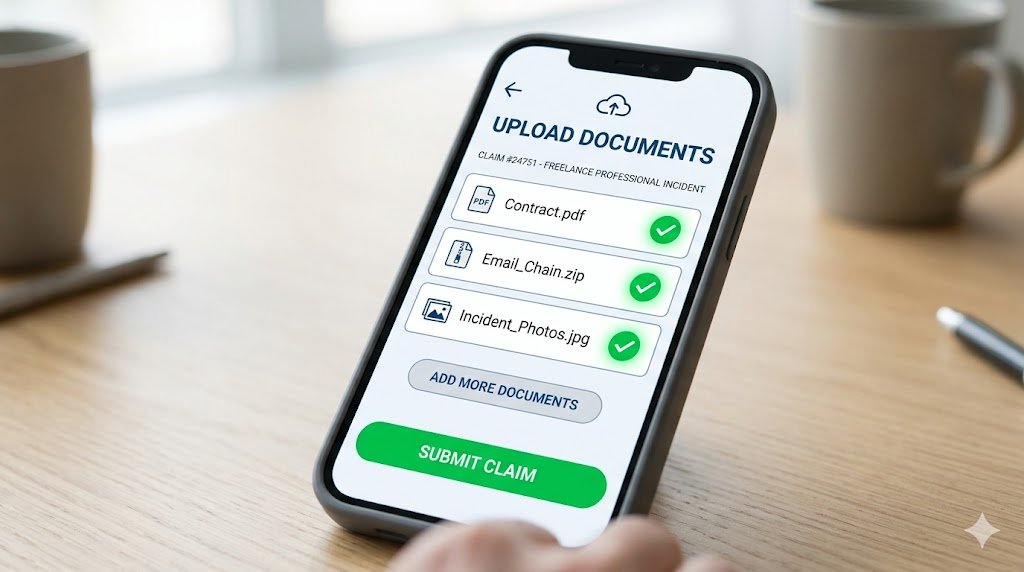
Step 4: Upload Your Documentation
This is where the documentation you gathered earlier comes in. The app provided a secure portal for me to upload all the relevant proof for my liability claim:
- The project contract.
- The email chain with the client.
- The specific work I had delivered.
Step 5: Await Contact from a Claims Adjuster
After I submitted the initial report, the app notified me that a claims adjuster would be assigned to my case and would contact me within 1-2 business days. The key difference I found is that while the submission is digital, a real human still takes over to investigate a complex liability claim.
The app, however, continued to be the central hub for all communication. I received all updates via push notifications and could message my adjuster directly through the app.
Final Thoughts: A Modern, Streamlined Process
While a liability claim is always stressful, I found the on-demand insurance process to be incredibly efficient and transparent. The app acts as an organized command center, keeping all your documents and communications in one place.
Knowing how to file an on-demand insurance claim is a crucial skill for any modern freelancer. By being prepared and following these steps, you can navigate the process with confidence and let the insurance do its job: protecting your business.






Leave a Reply