
Hey everyone! I’m Adnan from The Insurtech Guide. We love InsurTech companies for their speed and efficiency. Most of the time, their app-based claims process is a dream. But what happens when the dream turns into a nightmare? What do you do when your claim is denied, or the settlement offer is unfairly low?
It’s a frustrating and stressful situation. I once had a claim for a damaged piece of equipment that was initially denied by an InsurTech provider due to a misunderstanding. I felt helpless at first, but I learned that there is a clear process to challenge the decision. You have rights as a customer, and you don’t have to accept the first “no” as the final answer.
Dealing with a disputed insurtech claim requires a calm, organized, and strategic approach. In this guide, I’ll walk you through the exact steps I took to successfully appeal the decision and get the payout I deserved.

Table of Contents
Step 1: Understand Why Your Claim Was Denied
The first step is to take a deep breath and become a detective. Before you can fight the decision, you need to understand it. Your insurer will send you a formal denial notification, usually by email and in the app.
My Experience: I opened my denial letter and read it carefully. It stated that the damage wasn’t covered under my policy’s “accidental damage” clause. This gave me my starting point. Look for the specific reason, quoting the exact part of the policy they are using to justify the denial.

Step 2: Gather Your Counter-Evidence
Now that you know their reason, your job is to prove them wrong. This is where you build your case. Go back through all your documentation and find evidence that directly counters their reason for denial.
What I Did: In my case, I had taken a video of the equipment malfunctioning right after the incident, which clearly showed the damage was accidental and not due to wear and tear. My counter-evidence included:
- The original photos and videos of the damage.
- My policy document, with the “accidental damage” clause highlighted.
- A written, point-by-point rebuttal of their reasoning in a simple document.
Step 3: Initiate a Formal Appeal Through the App
This is where the process for a disputed insurtech claim can be different. Instead of mailing a letter, your first step is almost always within the app itself.
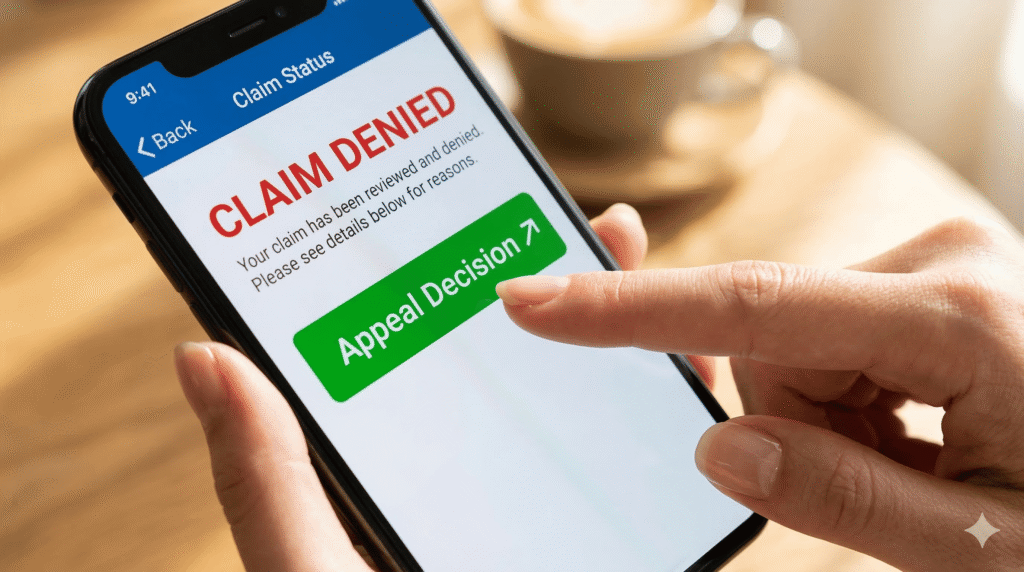
- Find the “Appeal” or “Dispute” Button: I went into my closed claim in the app. There was a clear option to “Appeal this decision.”
- State Your Case Clearly: The app provided a text box where I calmly and professionally explained why I believed their decision was incorrect. I didn’t write an angry paragraph; I wrote a clear, fact-based argument.
- Upload Your New Evidence: This is the most crucial part. The app had a section to upload new documents. I uploaded my written rebuttal and the video evidence I had gathered.
Step 4: Escalate to Higher Levels (If Necessary)
Often, providing clear new evidence is enough to get the decision overturned by an internal review team. But what if they still say no? You have two more powerful options.
1. File a Complaint with Your State’s Department of Insurance:
Every state has a Department of Insurance (DOI) that regulates insurers and protects consumers. You can file a formal complaint with them for free. They will investigate your case and mediate with the insurance company on your behalf. This is a very powerful step.
2. Consider a Public Adjuster or an Attorney:
For very large or complex claims, you might consider hiring a public adjuster (who works for you, not the insurance company) or an attorney. They take a percentage of your settlement, but their expertise can be invaluable in a major dispute.
Final Thoughts: Be Persistent and Professional
Successfully handling a disputed insurtech claim comes down to being persistent, professional, and prepared. Don’t get emotional in your communications. Present clear, fact-based evidence.
Remember, the initial “no” is often just the start of a conversation. By following a clear process and using the digital tools at your disposal, you can effectively challenge an unfair decision and fight for the coverage you paid for.






Leave a Reply